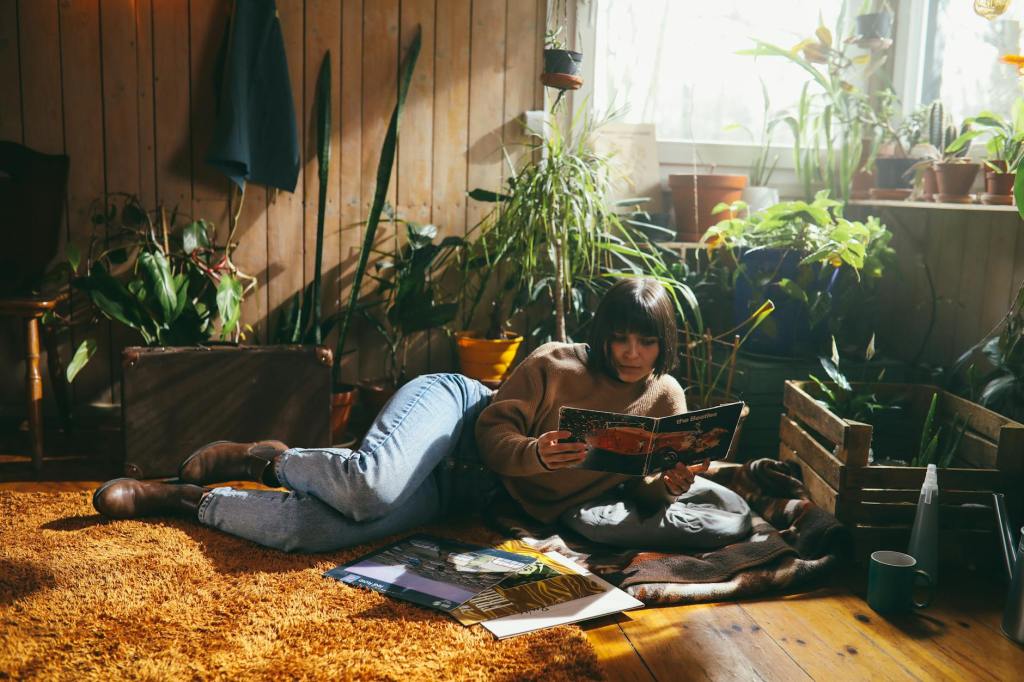
The backyard, overgrown with ivy and jasmine, settled her more than the museum of life’s artifacts inside her grandmama’s home. A blunder of overconsumption, adventures in the form of souvenirs, and a habit for clutter being defined as decor style, the house represented the mind of a lost inner child hiding within the layers of things that proved her significance.
Our personal spaces can be a strong representation of how we operate and feel on the inside. To relax the mind and calm the body, our environments must reflect the state of what we want. Ever wonder why when we feel overwhelmed we start cleaning, or when we are stressed we crave to be outside in the open? Get started creating a home that supports ease, cleanliness, and peace with the following practices.

Be conscious of habitual behaviors
We are often standing in the check out line peering into our carts reviewing all the items of intended purchase before it’s our turn to scan and wince at the total. We are excited for the teddy faux fur pillow and ultra soft blanket; we wanted them so much.
The blanket stacks on top of the other blankets in the closet and the pillow joins the seven other pillows on the bed. With endless access to “things” it is very easy to collect beautiful, cute, gorgeous “things,” but do you really need them?
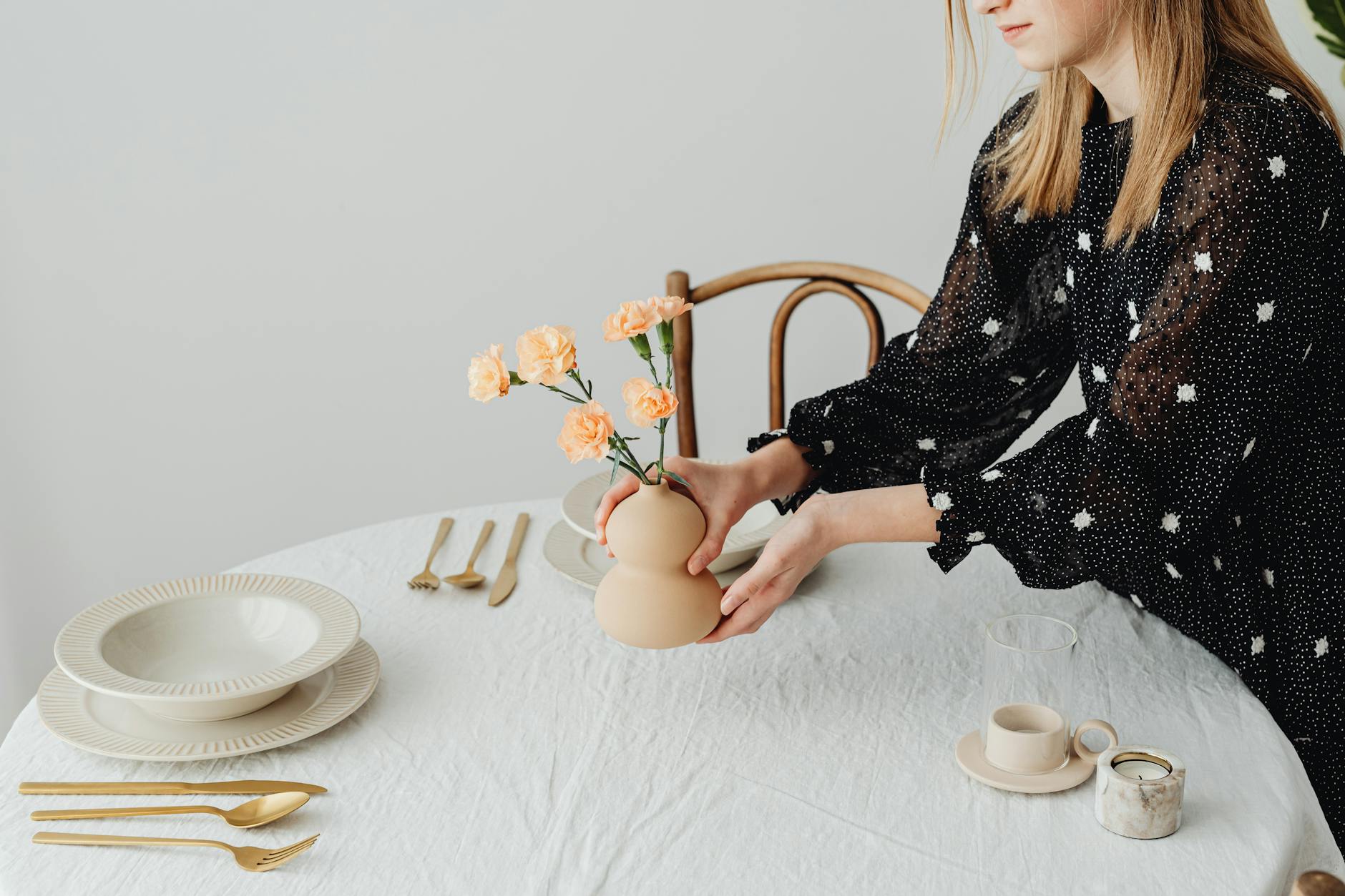
Be conscious of what you need versus what you just want or even kind of like. When running errands and going shopping, be mindful of your habits and set intentions before you get to the cash register. Keep items in your home that hold strong meaning and use.
Keep sentimental and meaningful pieces
Over time, we grow connected to the “things” that represent memorable experiences. We inherit our grandmother’s jewelry or bring home a hand carved sculpture from your favorite vacation spot. Pieces that may not hold much use, but hold connection are important, can accumulate over time. Be mindful of your home’s items that hold strong meaning and add use to your home.

Our experiences have a tendency to come along with evidence in the form of a souvenir, craft, or gift. As we let go of the pressure to keep these items out of care and kindness, practice being mindful of the accumulation of things in the first place. If you made a memory glass blowing on a trip last year, you don’t need to repeat the experience until you have a shelf full of personalized glass formations.
You’re worthy of keeping pieces that connect you to past experiences but scale the importance of storing things just for the sake of storing them.
Reinvent the function of furniture
Furniture has a history of being decorative statement pieces that could represent wealth to a full bedroom set of a matching theme. Whatever furniture you have, a minimalist design style eliminates the idea of furniture for status and focuses on furniture for function. All pieces fit perfectly within each space and if it is not being used, it can live somewhere else where it can be. Any sized room feels more open with less, similar to how we live.
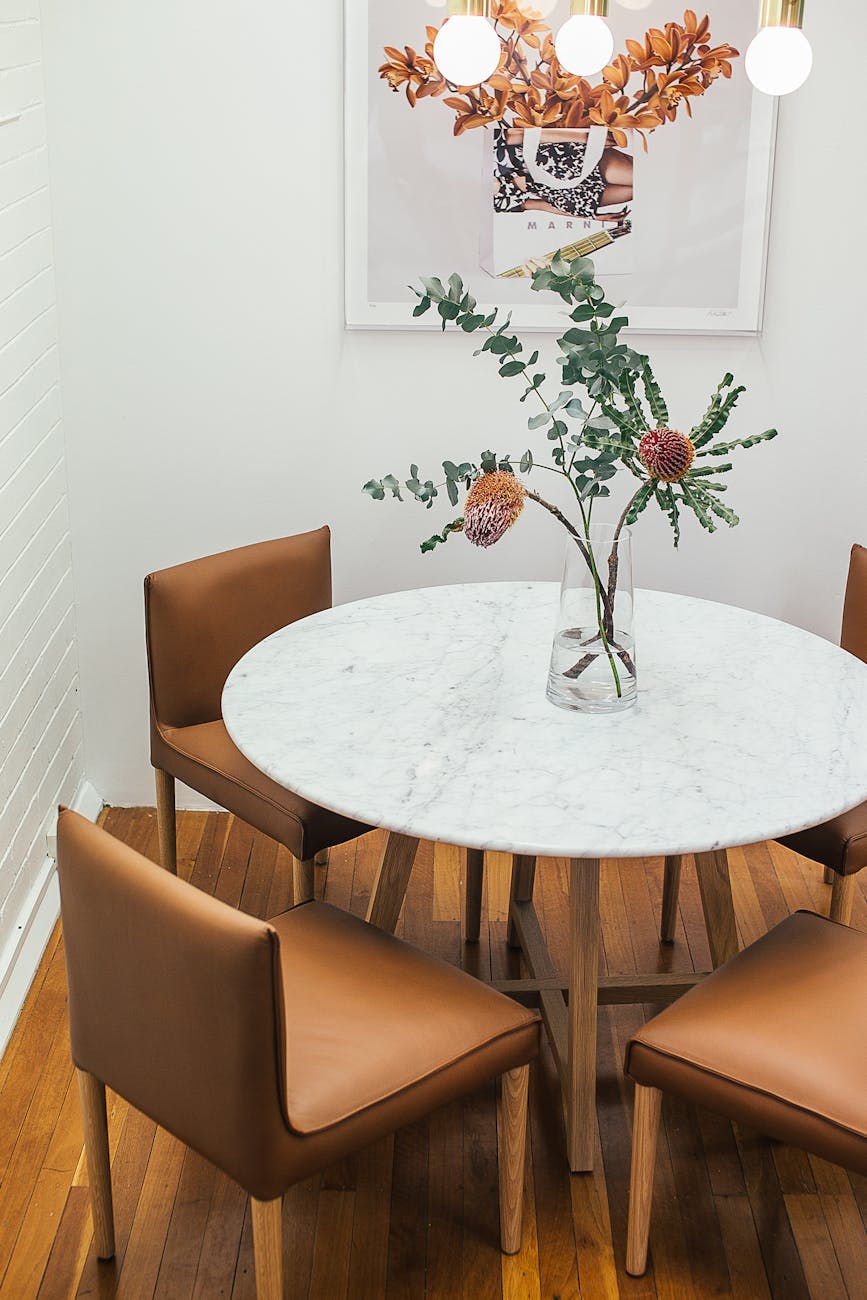
If you need to search for the perfect couch and it takes three months, that’s okay. Minimalism for furniture is focusing on fitting the space so it doesn’t feel like there is space to fill in a room. Plus, when you really like what you have in your home, you are less likely to purchase new furniture later which help minimize waste.
Living in a minimalist home can look different to each of us and we all have our own styles. Whatever the level of minimalism, you can simplify your home to help ease your mind and keep the pieces that mean the most and are useful.
Leoluna loves you~




 LEOLUNA
Leave a comment